

Lesson 04 • Verification & Playtesting

WALK THE PATH AS A READER

In linear prose, proofreading means reading from page one to the final period. In interactive fiction, reading your source file top-to-bottom hides the exact seams where branching stories break: jarring tone transitions between reconverging scenes, characters referencing events that only happened on another branch, and mathematical thresholds that no human player can actually reach.

Testing a branching narrative requires two distinct passes: Mechanical Route Verification (checking the logic and state math) and Reader Comprehension Playtesting (watching how an unspoiled reader interprets your choices).

THE ROUTE-TESTING CHECKLIST

Before handing your build to an external playtester, walk through your story map using distinct archetype personas (for example: "The Cautious Diplomat," "The Reckless Mercenary," and "The Indecisive Flip-Flopper"). Verify each of the following seven structural points:

  • 1. Orphaned Passage Audit: Are there any nodes with zero incoming links because a prerequisite flag was renamed?
  • 2. The "Lazarus Bug" Check: Can an NPC who was arrested, dismissed, or killed in Branch B accidentally speak a line of background chatter in the Chapter 4 bottleneck scene?
  • 3. Prerequisite Arithmetic: If a late-game choice requires cunning >= 65, count the maximum possible cunning points obtainable across the shortest path. Never require 100% optimal choices to pass a check.
  • 4. Choice Rhythm & Pacing: Measure the word count between prompts. More than 900 words without an interactive beat turns the reader passive; choices every 30 words create click-fatigue.
  • 5. Failure State Interest: When a player fails a stat check, does the story push them into a more complicated dramatic situation ("fail forward") rather than forcing an instant restart?
Playtester sitting at a table with a laptop and printed node map marking continuity notes with a pen

HOW TO RUN A "THINK-ALOUD" PLAYTEST SESSION

Automated tools like ChoiceScript's Quicktest and Randomtest (which simulate thousands of random playthroughs to catch script crashes and variable balancing) are invaluable. However, an automated script cannot tell you whether your mystery clue felt fair. Pair automated testing with live observation:

Story designer quietly taking notes while a playtester reads a branching narrative prototype Step 1: The Pause

Watch Where They Hesitate

Ask the reader to think aloud when they reach a choice prompt. If they pause because they are torn between two compelling sacrifices, your choice architecture is working. If they pause and ask, "Wait, who is Harmon again?", your context setup needs reinforcement.
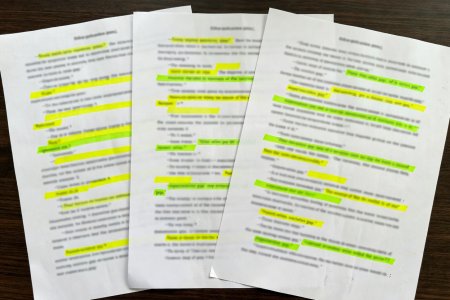

Printed story script with yellow and lime highlights marking expectation gaps after a choice Step 2: Prediction

Ask What They Expect

Before the tester clicks an option, ask: "What do you think this choice will accomplish?" If they click "Reason with the guard" expecting a quiet bribe and your script has the protagonist deliver a fiery political speech, rewrite the choice label immediately.

Two collaborators reviewing a completed story path diagram after a playtest session Step 3: The Recap

Listen to Their Retelling

After the session, ask the tester to summarize the story in their own words. The moments they emphasize reveal which consequences registered emotionally; the plot points they omit show where state transitions felt invisible.

DESCRIBE A DESIGN KNOT